
Finding Sterling Heights Residents Through Records
Sterling Heights keeps no master roster of everyone in town. So match the question to the record that answers it. Ownership questions start with the parcel system. Deed questions point to the county's land-record index. A voter match confirms registration. A court filing names a party. An old newspaper item can fill in the rest of a story. Each source speaks for itself, and none describes a whole household alone. That is the core habit behind any sound residents directory search. Cross-check before you trust a single hit. An owner's mailing address often sits in another city. A voter result proves registration rather than where someone sleeps today. Library collections earn their keep once the trail runs back before Sterling Heights took its modern shape. Every tool below stays within its proper lane. The resident lookup works best when you keep those lanes straight.
- Search the City of Sterling Heights assessing service by address, owner name, or parcel number.
- Open the parcel in Macomb GIS and record its tax ID, situs address, and legal geography.
- Check the Macomb Register of Deeds index for grantor and grantee names tied to the parcel.
- Use the Michigan voter service only for the public registration result it returns.
- For an older household, ask the library for newspaper, directory, map, or township-era material.
Sterling Heights Residents Records Offices
Sterling Heights, Macomb County, and Michigan each hold one piece of a resident's paper trail. The city assessor ties a parcel to its current assessment data. The Register of Deeds records every instrument that affects land. State voter and court services can supply a public confirmation route. An online screen may not hold the record. The custodian's counter, a written request, or the library then becomes the next channel.
Macomb County Register of Deeds
120 N Main
Mount Clemens, MI 48043
586-469-7953
Sterling Heights Assessing
40555 Utica Road
Sterling Heights, MI 48313
586-446-2340
Michigan Elections Lookup
Statewide registration service
Public status and election geography
Local questions: City Clerk
Sterling Heights Residents and Parcel Search
The city's Assessing page opens into a public BS&A search. It earns its place as the first stop for any parcel question. You can query by address, owner name, or parcel number. Results may show assessment and taxable values, the owner's mailing address, exemption indicators, building characteristics, and links to related city services. A homestead flag can hint at owner occupancy. It still cannot name every person living at the property, so treat it as one clue within the wider residents directory, not the whole answer.
| BS&A search choice | Use it for | Important limit |
|---|---|---|
| Address | A full address or range, with an advanced option | Use the situs result, not a postal guess |
| Name | Names associated with parcels | Try spelling variants and omit punctuation |
| Parcel number | A known tax identifier | Verify formatting from the returned record |
| Comparable building | Property characteristics | It is not a resident roster |
Sterling Heights Assessing describes the address, parcel, and comparable-building routes shown in this capture.
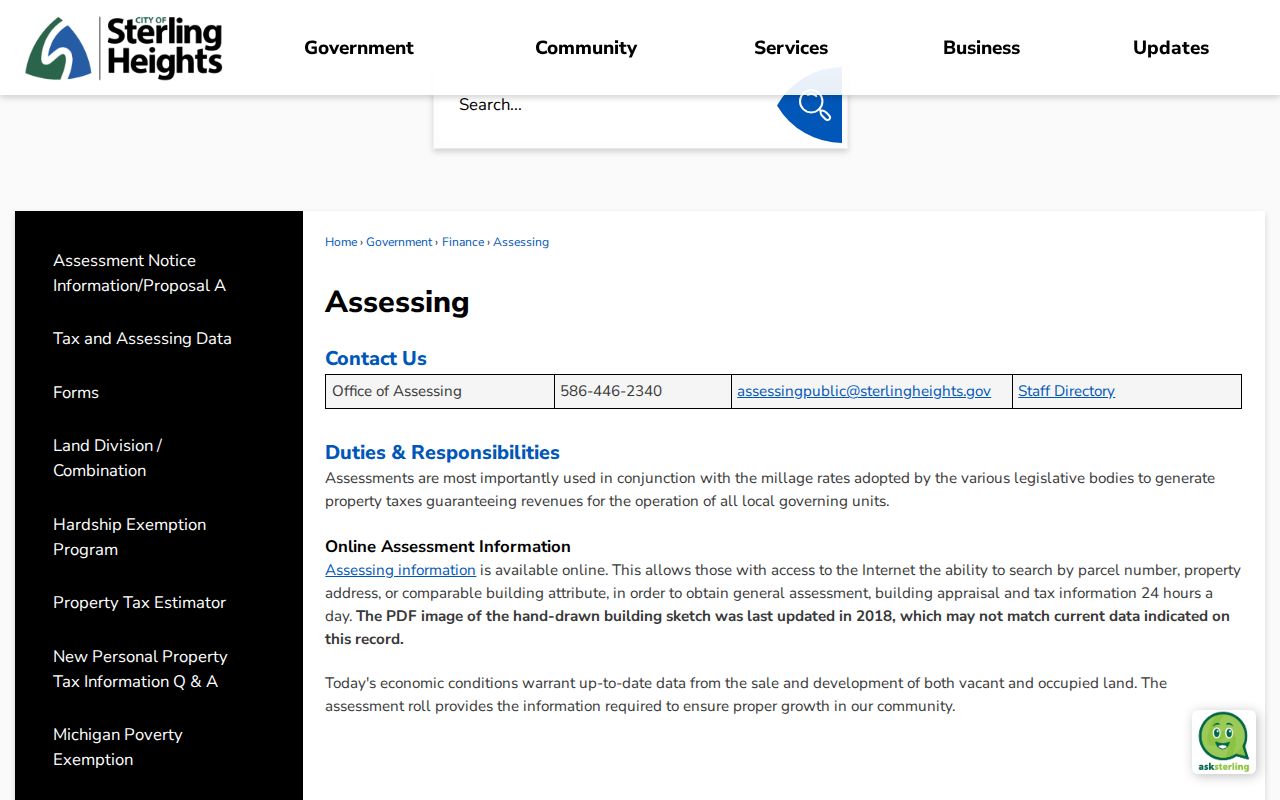
The official Assessing screen marks the starting point for a property lookup, not proof of a household. The city itself cautions that a hand-drawn building-sketch PDF was last updated in 2018 and may not match current conditions. BS&A Online for Sterling Heights lays out the municipal service choices that sit behind the property search, which makes it a natural companion to the street directory work above.
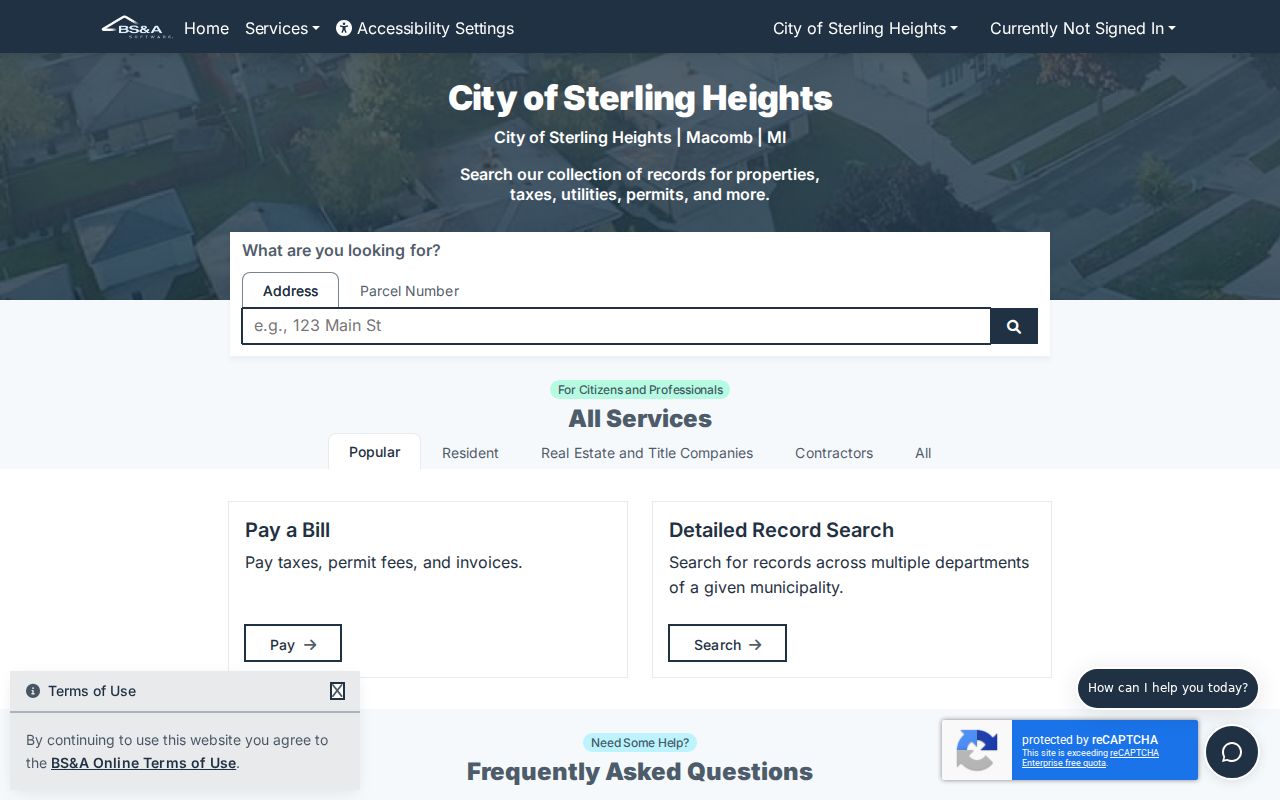
A basic property lookup in Sterling Heights needs no account at all. The BS&A account exists for one purpose: claiming ownership of a property record. Anyone can run an initial public-record search without signing up.
Map a Sterling Heights Resident Address
A parcel card names an owner. The Macomb County Parcel Explorer adds the map layer a card cannot. Search a full or partial tax ID, or search by property address. The county guide suggests dropping the street suffix when an address search fails. Search All Known Address digs deeper. It reaches the E911 address database, where apartment, condominium, or mobile-unit points can share one tax parcel. Still, no layer lists occupants.
Pan and zoom to the parcel, then hit Identify. Layer, selection, measure, print, and export tools connect a street address to parcel geometry. They also cover adjacent land. Sterling Heights OneView layers on ZIP, voting, school, flood, utility, subdivision, road, and zoning detail. For a full parcel-by-street process, use the Sterling Heights street directory.
Macomb GIS supplies the parcel map and its tool panel.
Map layers give location and parcel context, nothing more. Check any result against the assessor record and, where ownership history matters, the recorded-document index.
Sterling Heights Residents in Voter Records
Michigan treats voter registration as a public record. The public view still has firm limits. Voters in Michigan do not register by party, so no lookup will show one. Driver-license and state-ID numbers stay out. So do birth month and day, phone numbers, email, the office that first received a registration, and refusal-to-register details. Address details may also be withheld for protected voters and Address Confidentiality Program participants.
Treat the interactive service as a current, one-person check. A full voter file takes a separate request. The public lookup is not a directory of everyone tied to an address. Registration status shifts as records are maintained, so match a name with a parcel, a date, or another official record before calling it the same person.
The Michigan Voter Information Center is the statewide lookup.
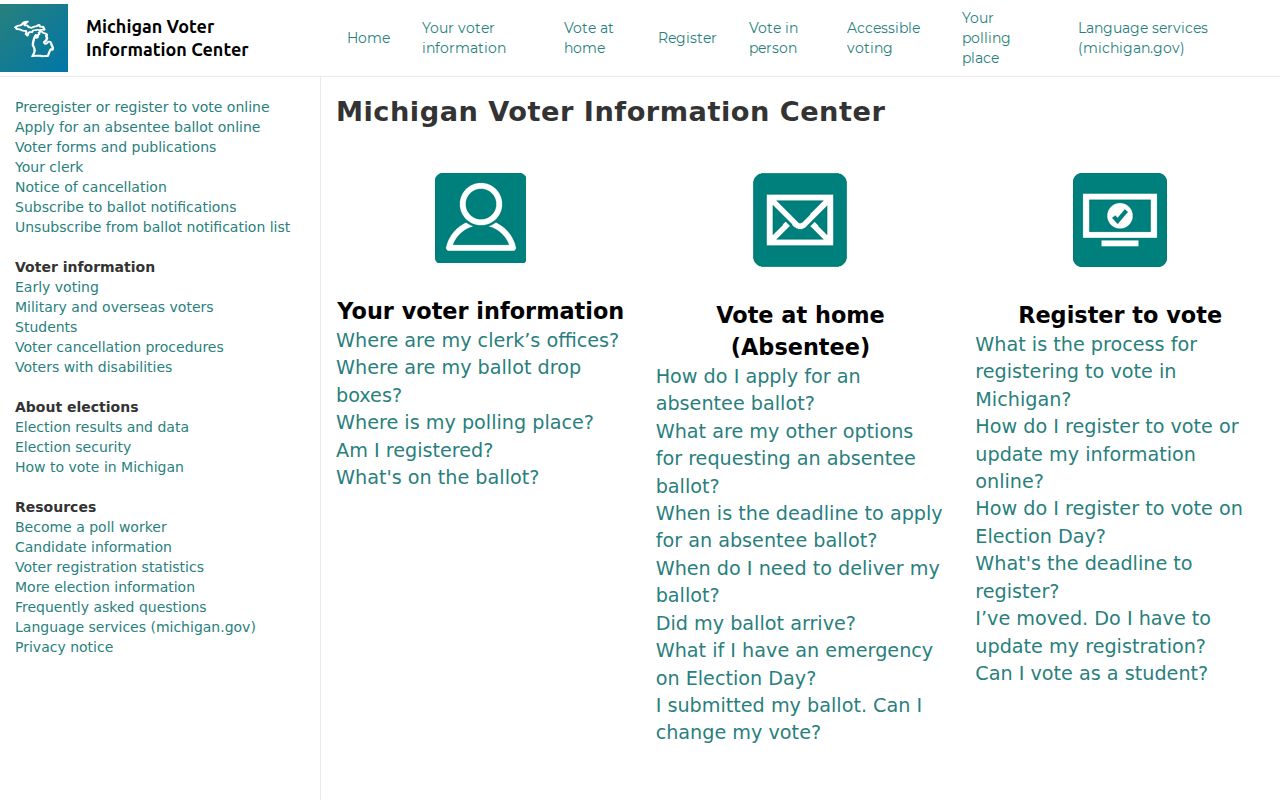
A Sterling Heights registration form is simply a public route onto the voter rolls. It does not prove that every adult at a given Sterling Heights address appears in residents records or any resident lookup.
Sterling Heights Residents in Recorded Deeds
The Macomb Register of Deeds search traces parties and property, not people. It is not a residents directory. The free Basic Document Search works as a broad first pass. Advanced access adds address, legal-description, parcel-ID, and party searches. Images and copies carry separate costs. For a common surname, search the last name with and without a middle initial. Then narrow with a recorded-date range. Keep the roles straight: a grantor gives up an interest, and a grantee takes one on.
| Either party | Broad name search, normally last name followed by a space and first name |
|---|---|
| Grantor or grantee | Transferor or recipient role, useful in a backward deed trail |
| Address or parcel ID | Advanced options for a known property |
| Legal description | Often stronger than a modern address for older land records |
| Document type and dates | Narrow a crowded result set and identify the instrument |
The deed index is not guaranteed complete or verified. Macomb County flags anything recorded before December 1955 as a special search problem. Free public terminals at the office display the indexes. Staff searches, written requests, mail, and counter visits all remain open when a web search stalls. Clear images or copies may still require purchase. The Macomb Register of Deeds Search Options page spells out the difference between its routes. It covers both the basic and the advanced search.
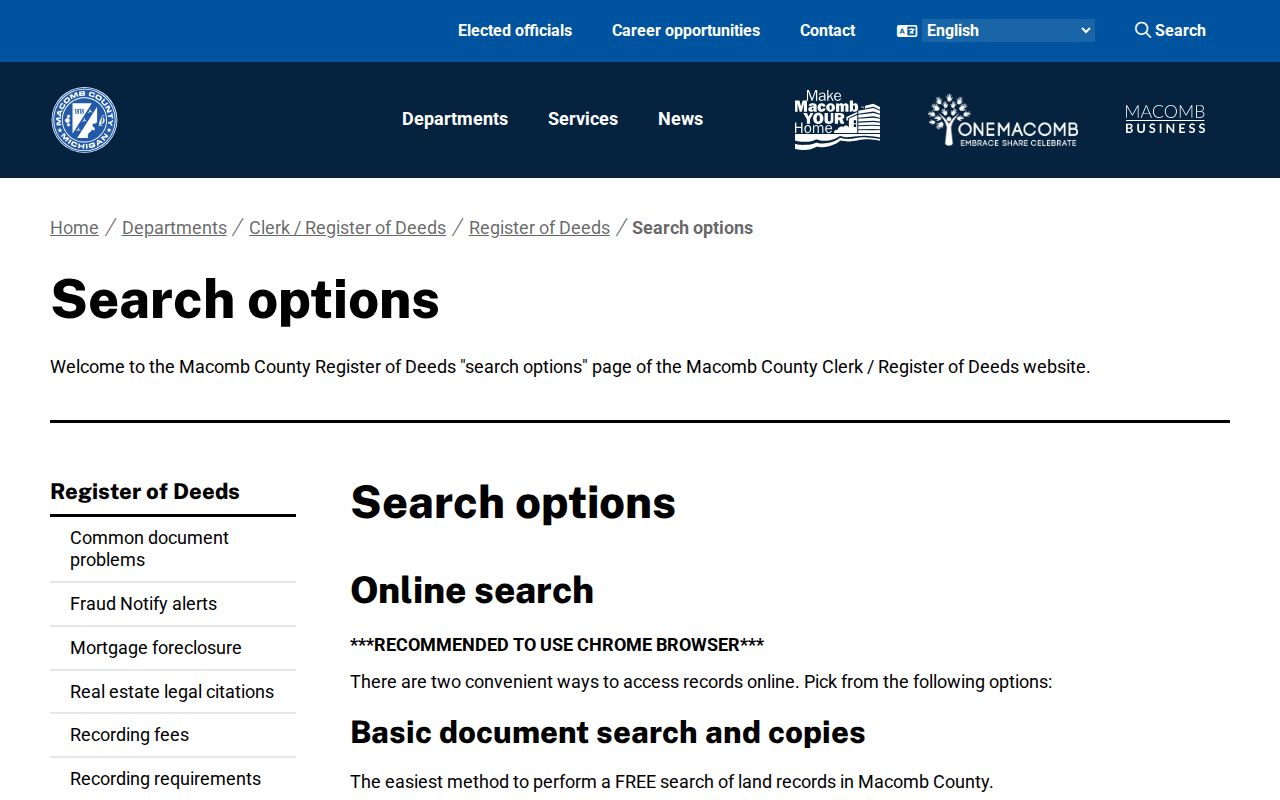
A name in a deed only marks a party to the recorded instrument. Before it feeds a Sterling Heights resident trail, confirm the document type, parcel, legal description, and dates.
Current Sterling Heights Resident Directories
Current Sterling Heights sources are split by function rather than gathered in one place. Each can confirm a piece of the picture. A property connection here, an official filing there, a registration result, or a case party. None works as a complete roster. The fastest route depends on whether the starting fact is a name, parcel, event, or relationship.
| Official source | What it can show | Access route |
|---|---|---|
| City assessing and BS&A | Parcel connection, owner name, situs and mailing fields | Public property search or assessor counter |
| Macomb GIS | Parcel geometry, tax ID, address point and layers | Public map viewer |
| Register of Deeds | Grantor, grantee, instrument, record date, legal description | Basic index, terminal, staff, mail, or copy route |
| Michigan voter service | Public registration match and election geography | Interactive lookup or separate records request |
| Library and archives | Historic names, notices, directories, maps, and local context | Research desk, collection, microfilm, or archive request |
Sometimes the goal is one person, not one location. The Sterling Heights resident lookup orders these same sources around a name for exactly that kind of search.
Sterling Heights Resident Lookup Court and Vital Trail
MiCOURT Case Search is the statewide doorway for public court lookups. A Sterling Heights residents directory hunt often runs through it first. A result can carry a party name, case number, case type, and status. Dates and docket entries may appear too. Sensitive case classes stay out. So do nonpublic records. Sterling Heights district matters land at 41-A District Court. The 16th Circuit and Probate Court sit up in Mount Clemens. A party lookup there can open the door to a full public file request.
One caution belongs here. A filing proves a party role, not a current home address. Treat the display result as a lead only. For the official paper, ask the named court for its file or copy route. Do not rely on the screen alone. The court landing page below is the right first step for any name search. It serves any hunt, whether you are tracing neighbors, past residents, or verifying a residents directory match. MiCOURT Case Search appears in the records that follow.
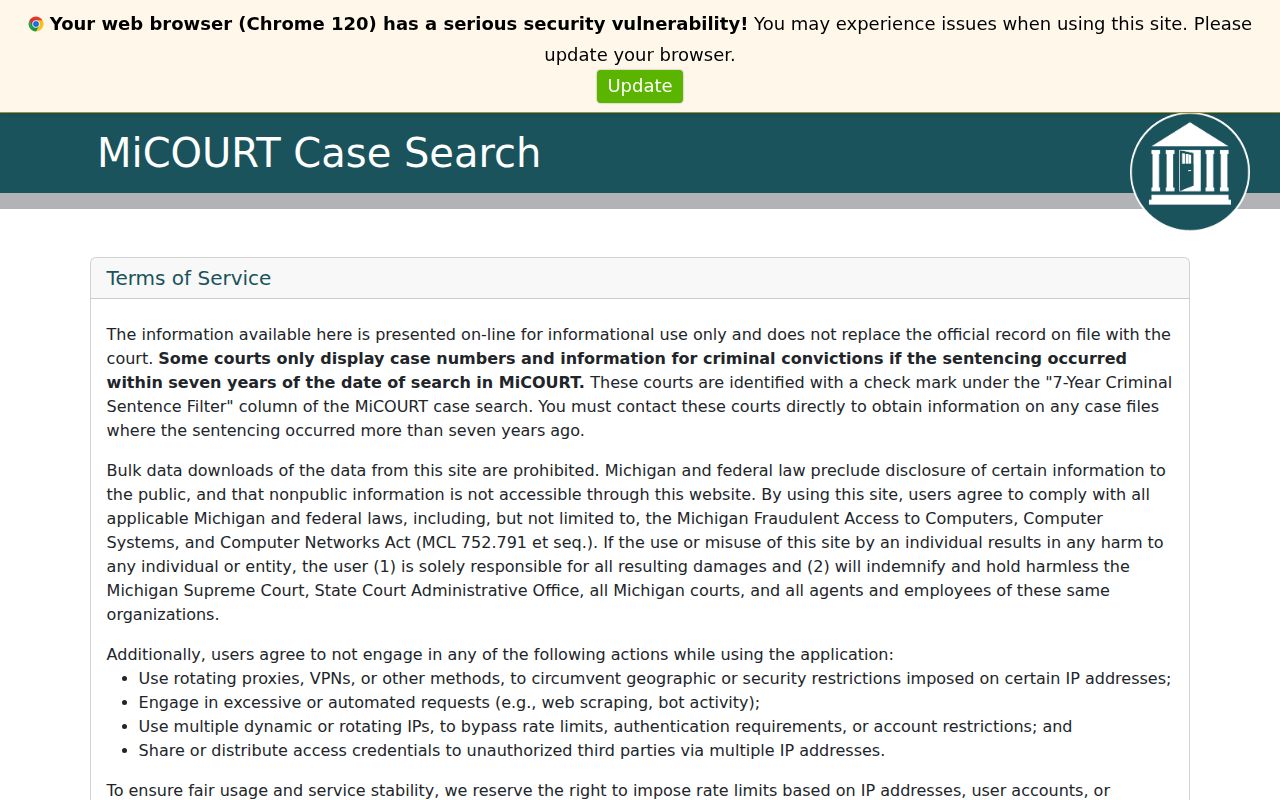
The portal is informational at heart. Case categories and the fields on display shift from court to court, so weigh any matching name against dates, court location, and case detail before trusting it for a resident lookup.
Vital evidence takes a different path. Michigan Vital Records handles order requests for birth, death, marriage, and divorce documents, with records reaching back to 1867. Birth records under 100 years old carry eligibility rules. Death and marriage access follow rules of their own. Ordering runs by mail, online, drop box, appointment, or Will Call, and Macomb's Clerk/Register plus local library resources add historical channels a city directory researcher will appreciate. Michigan Vital Records ordering lays out the event, identity, eligibility, delivery, and payment choices a requester faces.
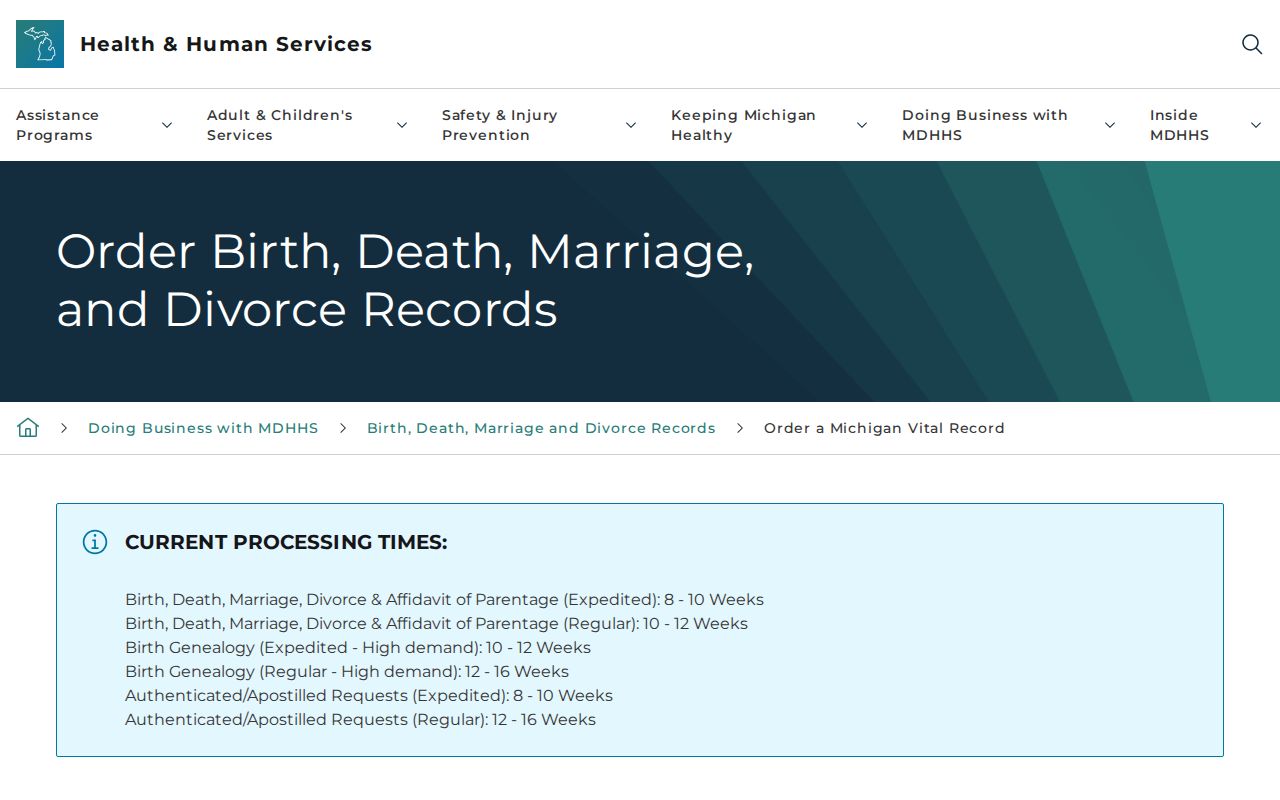
Getting a certificate means asking for the right record type with proper requester information. An index lead and a certified copy are different kinds of evidence in a Sterling Heights records search.
Sterling Heights Resident Records and FOIA Limits
Sterling Heights keeps a FOIA route for city records. The records must already exist and be described well enough to find. Requests go in by email, mail, drop-off, or fax. Michigan Freedom of Information Act, 1976 PA 442, MCL 15.231 et seq., sets the rules for timing. It generally demands an answer inside five business days. A written ten-business-day extension is possible. The law never forces a public body to build a fresh list or hand over exempt material. That limits how much a residents directory seeker can pull in one ask.
Privacy shields also sit on top of the FOIA process. Address Confidentiality Program participants and protected voters can stay hidden. Motor-vehicle data, sealed matters, juvenile matters, adoption information, and certain vital fields stay closed. They do not open just because a request is broad. Spotted an error? Keep the record number. Ask the office that created the record about its correction route. Sterling Heights FOIA supplies the local request channel shown below.
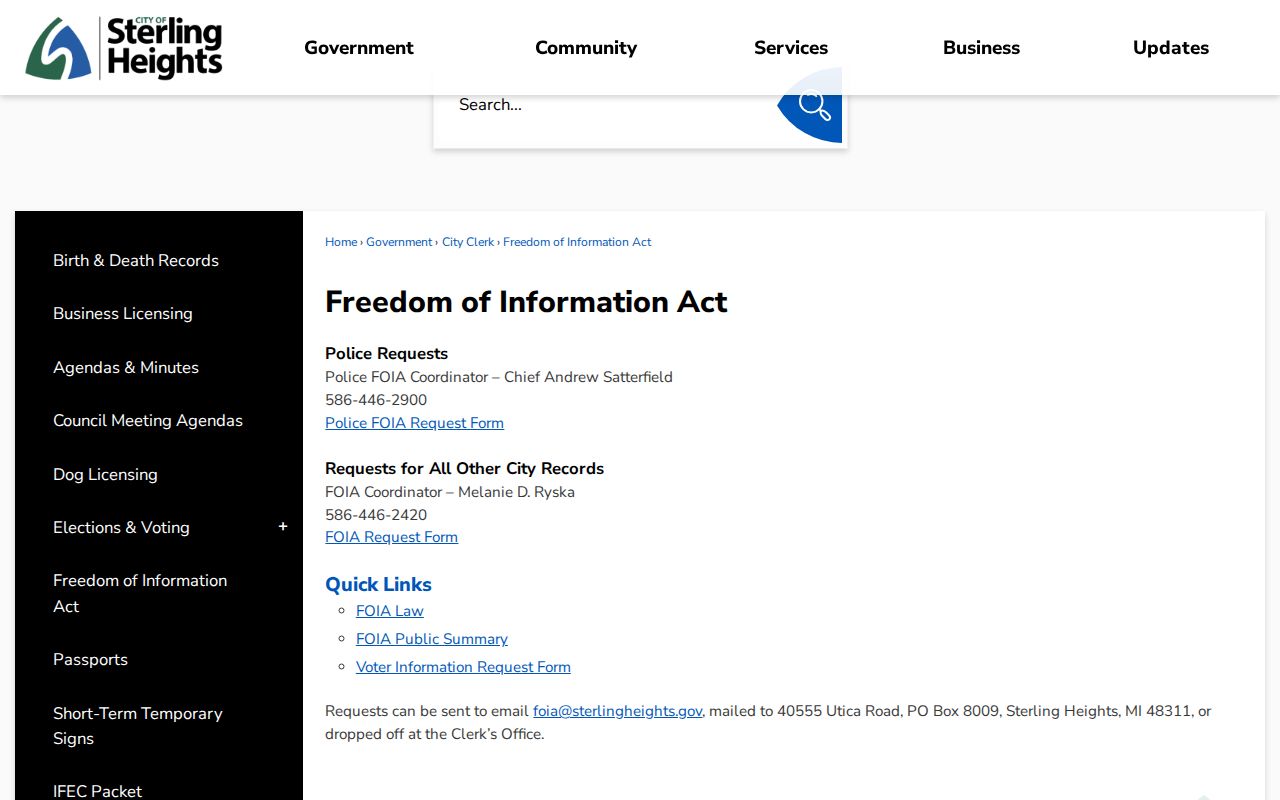
A focused request for one identified record works better than a resident-compilation demand.
Sterling Heights Resident Records Compared
Going straight to the custodian has real advantages. A direct search hands you a source, a date, and a record number you can check again. Commercial directory products blend public and licensed material. Their identity matching, update timing, and opt-out handling vary from one product to the next. Even a custodian record has limits. A deed follows land, a voter result follows registration, and a court entry follows a case.
| Research route | Strength | Check before relying on it |
|---|---|---|
| Official custodian | Known agency, date, and access channel | Record type, visible fields, and restrictions |
| Library or archive | Historic context and original collection citation | Volume, issue date, and whether an entry is an index lead |
| Commercial directory category | May surface a research lead | Source, freshness, same-name match, and removal process |
Keep a short source log. Note the link, retrieval date, name spelling, identifier, and the record's own limits, so conflicts surface early and the next custodian gets a precise question.
Historical Sterling Heights Resident Directories
Old searches often need an older name. Sterling Heights did not incorporate as a city until 1968. Before that, material may sit under Sterling Township, a rural route, Utica, or a nearby regional collection. Printed directories are thin here. No complete Sterling Heights household-directory run survives in the local record, so never attach an unverified publisher or year range to a family claim. The strongest regional lead is different. The Mount Clemens City Directory Master Index covers 1896 through 1966 and can point to names and addresses in volumes you inspect with the library. It is an index, not the volumes themselves. A historical entry shows a mailing or household snapshot. It is not a modern address, and the full collections plus a reading method are laid out in the Sterling Heights directory book.
Sterling Heights Residents Before Cityhood
The township-to-city boundary cuts through old records. Archives of Michigan holds Sterling Township assessment records from 1899 through 1968, followed by Sterling Heights assessment groups covering 1969 through 1979 and 1970 through 1979. Township election records run from 1882 to 1910. That makes 1968 a natural search breakpoint. It matters most when a present-day street address refuses to appear in an older index.
- Parcel
- A tax and land identifier that links an address to assessment and map records.
- Index
- A finding aid that points to a record; it is not automatically the underlying document.
- Criss-cross directory
- An address-oriented directory format that may help trace a household if a volume actually includes it.
- Legal description
- The lot, block, subdivision, or metes-and-bounds language used in deeds and plats.
Jot down the old place name, the parcel, and any legal description exactly as the record spells them. Keep the source's original wording too. Those details let you connect a modern map result to a township-era assessment book, a newspaper notice, or a recorded instrument without altering the historical evidence in front of you.
Sterling Heights Residents History Shelf
Sterling Public Library Research for Adults is the place to turn. An online index often falls short on a historical question. The library's research options cover genealogy databases usable on site. They also include archived and current local newspapers. The list spans the Detroit News and Free Press, the Macomb Daily, the Oakland Press, WorldCat, MeLCat, and the Local History Digital Archive. That archive stores photographs, maps, and documents from Macomb County and nearby communities.
Resident voices survive on the history shelf as well. Sterling's oral-history project started in 1985. It recorded 100 interviews, transcribed 70, and published 29 in a single volume. Local sources cite that volume under two titles. These are "Seven Miles from Home" and "Six Miles From Home." Cite whichever copy you actually use. The library, the Mount Clemens collections, and the Archives of Michigan all help here. A dead-end web result becomes a sharper next question rather than a stop sign.
Sterling Heights Residents in Local Memory
Edgerton Cemetery's public table is a narrow but genuine lead for family history. It lays out surname, given names, dates, and age for burials near Schoenherr and Utica. That structure can tie an old name to a cemetery record, an obituary index, a probate file, or a vital-record request. It cannot rebuild a whole life story. It cannot give a current address either.
Treat the cemetery, the Library's newspapers, and the Historical Commission collection as context. Then verify any important relationship through the right county or state record. A careful search preserves the source's exact wording, date, and place label. Never stretch a historical clue past what it actually says.