
Sterling Heights City Directory Collections
No complete printed run of a Sterling Heights city directory appears in official and local-history collections. That gap shapes everything else on this page. The strongest exact match is a regional one, the Mount Clemens City Directory Master Index. Around it, the Sterling public library and county heritage resources offer newspapers, maps, clippings, oral histories, and township material. The county heritage resources add newspapers and oral histories. Township material is there too. A resident lookup may land on a regional or township record. It may not yield a full street directory for the modern city. Treat each hit as a lead worth confirming against the volume itself.
| Collection | Years | Where Held | Access |
|---|---|---|---|
| Mount Clemens City Directory Master Index | 1896 to 1966 | Mount Clemens Public Library Local History | Regional index; confirm each volume and entry with the library |
| Sterling Public Library local history | Items vary, with township history from 1835 | Library and Local History Digital Archive | Browse photos, maps, documents, clippings, and local-history items |
| Utica Sentinel microfilm | About 1860 to 1960 | Sterling Public Library and Heritage Alliance leads | Ask adult services about notices, names, businesses, and deaths |
| Mount Clemens yearbooks | 1917 to present | Mount Clemens Library | Use a school year and surname as a companion clue |
| Macomb newspaper and obituary indexes | Coverage varies by title | Mount Clemens Library and Sterling library databases | Request a dated name or notice search when an index applies |
The Mount Clemens City Directory Master Index is the best public entry point for the regional run of volumes.
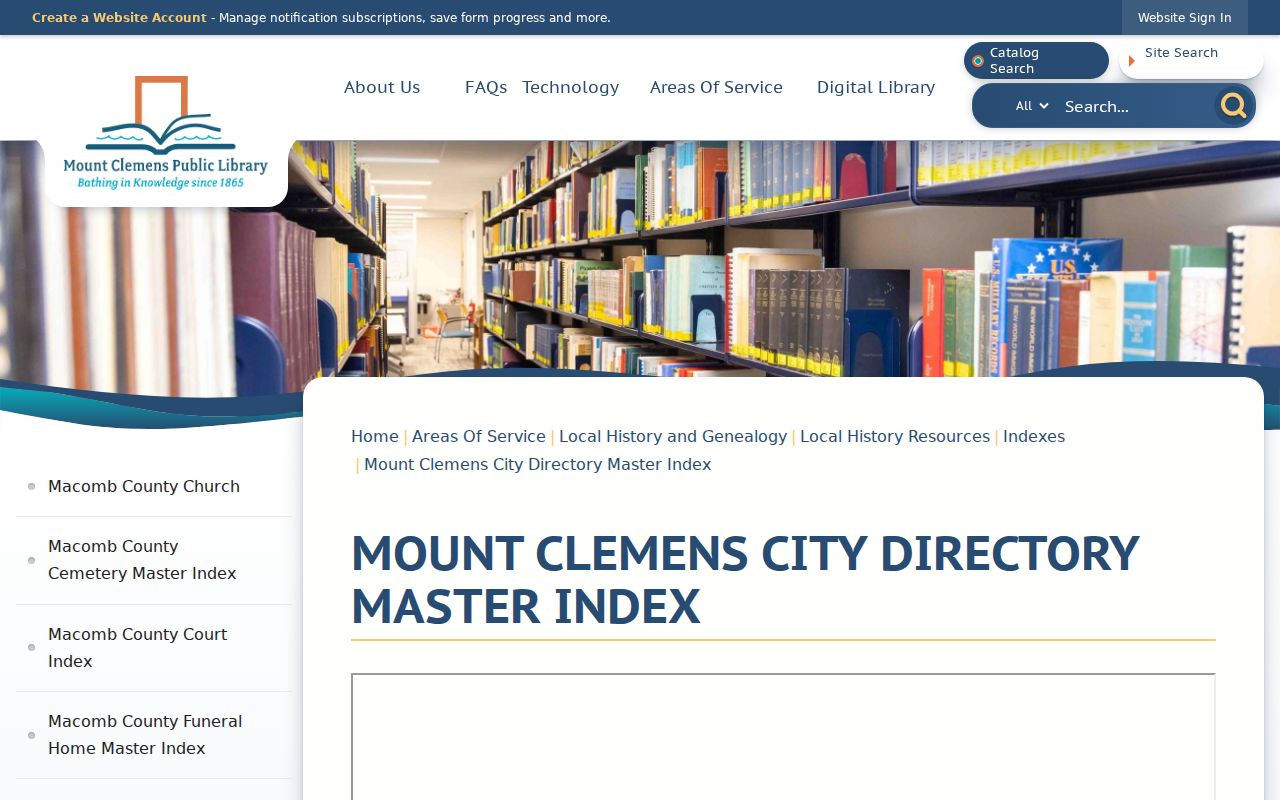
The index names the collection and its years. But it does not show a Sterling-area entry or describe how each volume is arranged. One year may carry an alphabetical section, another a street or reverse directory. Ask the library directly about the year you need. A phone call or email settles format questions quickly. Note: A missing directory year reflects the volume's coverage or publication pattern. That is not proof a household left Sterling Heights.
Sterling Heights Directory Names Before 1968
Sterling Heights became a city in 1968. Before that, records speak a different language. Deeds, news notices, census schedules, assessment rolls, and city-directory leads from earlier decades may use Sterling Township instead of the modern name. They may also use a rural-route address, a neighboring post office, or Utica. Always search the label used in the record's own era. A common surname or a renumbered street makes that shift even more important. A modern city name can hide a useful township record.
The Archives of Michigan holds Sterling Township assessment records covering 1899 to 1968. Sterling Heights assessment series begin after incorporation. Those rolls bridge the township-to-city divide nicely. They are not, however, a substitute for a true directory entry. When you compare sources, keep the parcel legal description and the ward or township wording side by side. Keep the directory year there too.
The county's record story runs older than the city itself. Macomb County was organized in 1818. The local historical collection reaches back to township inception in 1835. Sterling Township election records from 1882 to 1910 survive. Archival court, probate, naturalization, and military groups survive alongside them. Any of these can pin down a name or date that sharpens a regional city-directory search. They also explain why an older resident may be indexed under a label outside the modern city.
Sterling Heights Regional Directory Bridge
Mount Clemens is the county seat, and its library at 150 Cass Avenue holds the regional directory collection. The public landing page covers a master index spanning 1896 to 1966. It stops there. Publisher details, volume images, address coverage, and any reverse-directory promise stay behind the desk. Treat the index as a lead. Then request confirmation of the name, year, and volume. Do not assume a match means someone lived at a particular address.
The library lists local-history hours and volunteer-genealogist availability at selected times. Its published research service can search materials. It can scan or mail them for stated fees. Coverage includes index copies plus obituary, probate, and funeral searches. Call 586-469-6200 extension 6. Or use the Mount Clemens indexes to identify the right collection. Submit a focused request after that.
The directory index is only part of the holdings. The same library maintains obituary, funeral, cemetery, probate, court, military, naturalization, yearbook, and newspaper indexes. It also holds more than 300,000 volumes and 5,000 microfilm reels. A surname missing from the directory can be tested against another dated index. Just do not assume every collection covers the same years or the same fields.
For any request, supply the surname spelling, the year range, and the source type. Note whether a scan or mailed copy suits you. A focused question lets staff pull the correct index or reel. Avoid treating the regional directory collection as one searchable database.
Sterling Heights Directory Clues in Print
Newspapers fill the years where no verified city directory exists. Sterling Public Library offers adult-research links to several newspaper archives. These include the Sterling Heights Sentry, Detroit News, Macomb Daily, Oakland Press, Detroit Free Press, Ancestry Library Edition, and MyHeritage Library Edition. Remote access to the Macomb Daily starts with 2005. The Oakland Press remote run begins in 2004. Other titles may require a visit or a licensed database. The Sterling Public Library research desk anchors local access to those resources. It also anchors the local-history archive.
A single notice can yield an address. It can also yield a spouse, an organization, a school year, or a death date. It is still just a lead. Confirm the connection with a deed, a vital record, a probate file, a cemetery entry, or the directory volume itself. Do that before treating it as settled.
Sterling Heights Oral History Names
Not every record in the Sterling Heights residents directory world sits on a printed page. The Historical Commission and the library keep oral histories, residents telling the township-to-city story themselves. The project launched in 1985. It recorded 100 interviews, transcribed 70, and published 29 in a single volume. Farms, families, migration routes, businesses, and civic life all surface here. A standard city directory missed them.
The Sterling Heights Historical Commission collection also names the Veterans History Project. It adds the Upton House and historical books. One wrinkle: the city calls the published volume “Seven Miles from Home.” The Heritage Alliance uses “Six Miles From Home.” Cite whichever title appears on the copy you actually consult, and never quietly treat the two labels as the same edition.
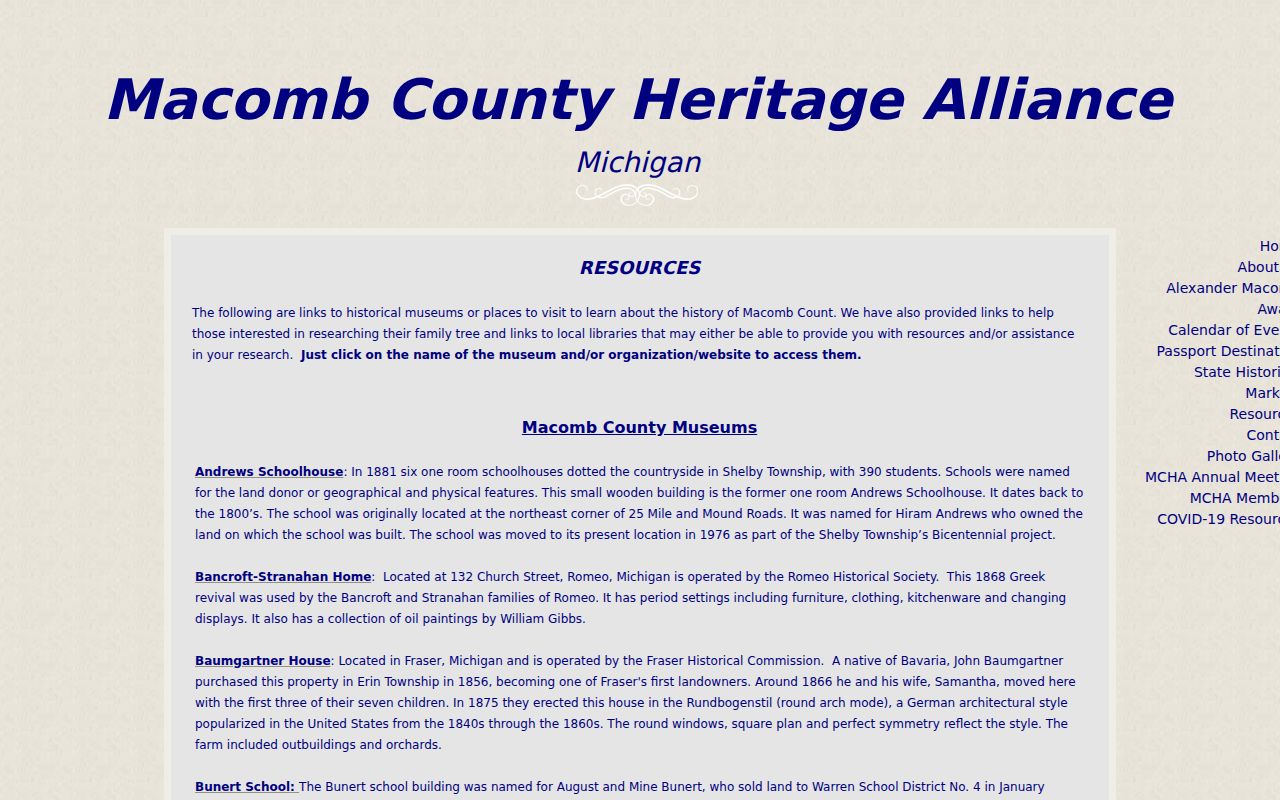
For the paper trail behind these interviews, the Macomb County Heritage Alliance resources point to microfilm and plat books. Township documents, photos, tapes, and clipping files round out the list.
Let an interview, clipping, or map shape your search question. Then keep its source label beside every directory or courthouse result it produces.
Reading a Sterling Heights City Directory
No published example of an actual Sterling-area city-directory page appears anywhere in these collections. So resist the urge to guess. Do not invent a local abbreviation. Never claim a particular mark always signals a particular address status. When you open a volume, transcribe the entry exactly. Note or photograph the abbreviation key, and record the year and page. Remember what an entry is: a snapshot of listing, mail, telephone, business, or household circumstances. It is not proof of where someone lives today.
| Name | Copy the surname, given name or initials, and every spelling variant as printed. |
|---|---|
| Household clues | Record spouse, widow, boarding, or household notation only if the volume prints it. |
| Occupation and address | Keep the listed work detail, house number, and street together, without expanding abbreviations from memory. |
| Listing marks | Note any address-status, telephone, or deceased notation exactly as the local key defines it. |
| Citation | Write down the directory year, page, volume title, library, and image or copy reference. |
- Criss-cross directory
- A volume arranged by street and address that may point from a house number to an occupant or listing. Confirm that the chosen volume has one.
- Householder index
- An arrangement that emphasizes the household head or address relationship, when a collection provides it.
- Abbreviation key
- The volume's own explanation of shortened words and marks. It controls how that particular entry should be read.
Trace Sterling Heights City Directories
Trace a household one year at a time. Leaping straight from a surname to a conclusion invites errors. Begin with the volume nearest a known marriage, death, school record, property transfer, or newspaper notice. Copy the full entry. Then test the next volume on the shelf. Year-by-year work catches a move, a changed initial, a widow notation, or a shift between Sterling Township and Sterling Heights wording.
- Confirm the street, parcel, and municipality in the current city property or GIS record, then record any old township label.
- Ask for the directory year closest to the event and inspect adjacent available years, copying the whole entry rather than only the surname.
- Check whether a reverse or criss-cross section exists. If it does not, ask about a street index instead of assuming address access.
- Pair the directory year with the relevant federal census release, remembering that historical township and ward geography may differ from today.
- Use deeds, plat books, marriage and death indexes, probate, obituaries, or cemetery records to test the transition.
A name vanishing from one directory can mean many things: a move, a death, a changed listing, or simply a household the volume never covered. Treat the historical collections as leads for follow-up. They are not the full answer on their own. For a present-day address chain, the Sterling Heights street directory follows property and map records instead of rebuilding the historical shelf.
Sterling Heights City Directory Limits
Sterling Public Library sits at 40255 Dodge Park Road, with adult services at 586-446-2642. The local-history digital archive lists a separate contact at 44750 Delco Boulevard. Those two access points, plus Mount Clemens Library and the Archives of Michigan, form the documented fallback chain. Turn to it whenever an online search does not surface the volume or item you need. Use the library for collection context. Use the archival custodian for the specific public record type.
Older materials bring their own hazards. Indexing may be incomplete. A nearby locality label may mislead. Person-level search may not exist at all. The safest record preserves its original title, year, repository, page, and context. And a city-directory listing should never support a claim about a current household.
Note: For pre-1968 research, search Sterling Township and regional labels alongside Sterling Heights. Do not conclude a directory has no result.